
The Day I Learned I Was Wrong About Her Comfort
A few weeks ago, during a shadow visit to another patient, Dr. Shaziya said something that stayed with me: “It’s you who thinks she’s adapted to this lifestyle. She is in pain and suffering.” She wasn’t talking about my mother. But she may as well have been. Sunanda Samal at Pallium India had told me something similar, months earlier — that my mother needed this kind of care. I’d heard it, and somehow still not fully heard it.
My mother has been bedridden for over a year now, on continuous oxygen from two concentrators, running round the clock. Somewhere along the way, I’d started calling this “her routine” — as if a year of breathlessness and stillness was simply what her life looked like now, something she’d adjusted to. It took someone else’s words, twice, from two people I trust completely, to make me sit with the fact that adapting to suffering is not the same as being free of it.
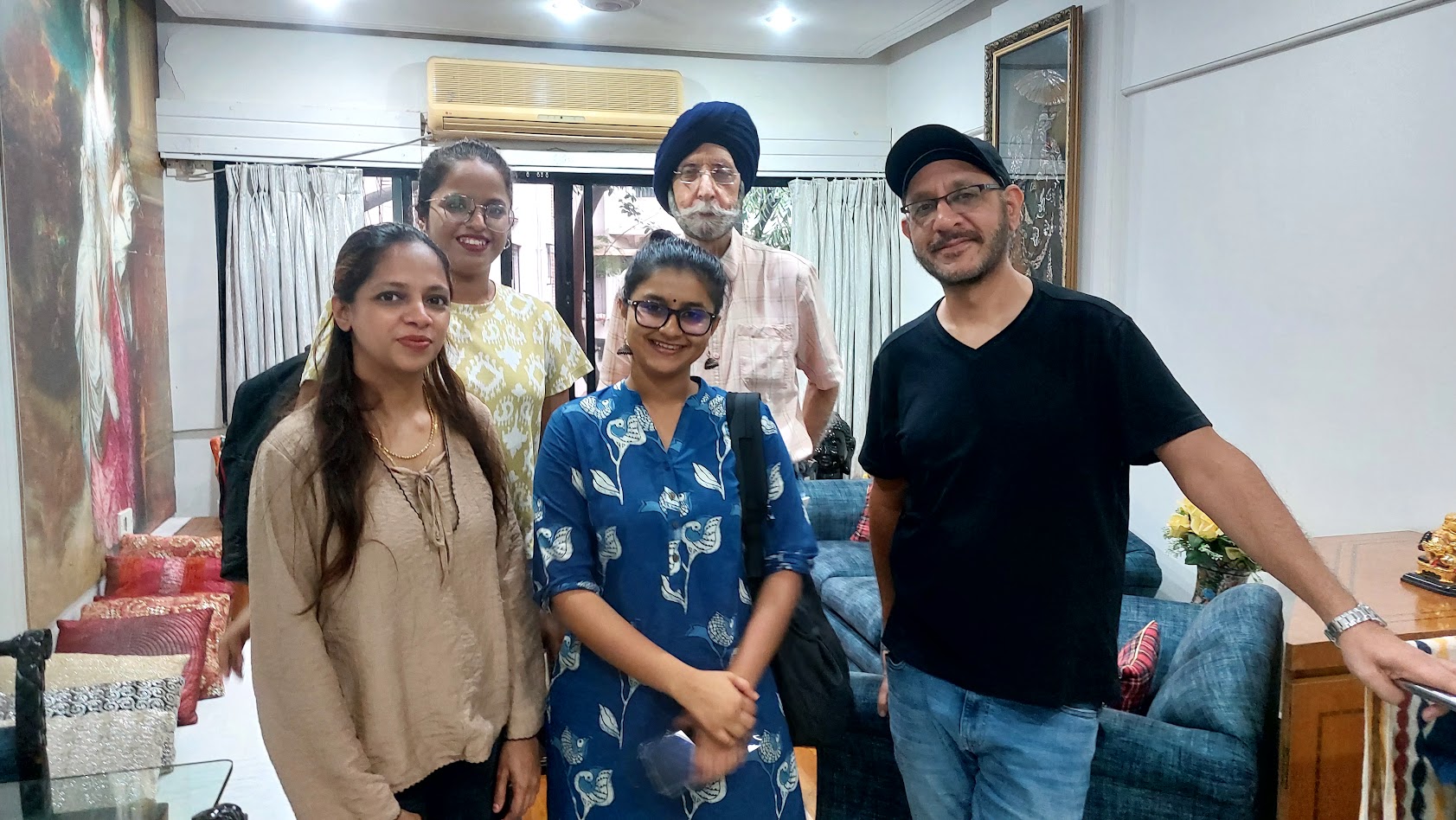
So when PalCare’s team came home — a doctor, a counselor, a nurse, and a shadow counselor, at the time we’d arranged — I went into it differently than I might have a month earlier.
I reached a little late; by the time I got there, they’d already settled in with my mother in her room. There was a lot of talking before anything clinical happened — introductions, smiles, the kind of gentle conversation that lets a family exhale a little before the harder parts. My father had been waiting for them. There were no tears in that room. Just quiet attention, and my mother, listening.
The counselor and doctor spent real time with both my parents — not rushing to paperwork, just talking, understanding what this kind of care actually means, what it could offer. It was heartwarming, watching my father’s face shift from cautious to understanding, and eventually, to agreement. He signed the consent to begin.
Her file was updated that day, after the doctor consulted with her seniors — advanced-stage lung fibrosis, they explained, is its own particular challenge, and needed a plan built specifically around it.
It was a lovely, unhurried experience, having them in our home. We took a few photos together, with everyone’s consent, which I’ve shared here.
Here’s what I’m holding onto, cautiously hopeful: the doctor mentioned that with the right care, my mother may need less continuous oxygen than she does now — that something like morphine, properly managed by her medical team, can ease the sense of breathlessness enough that she might spend less time tethered to the machines, and perhaps even move around her room again.
I don’t know yet how this will unfold. But for the first time in a long while, there’s a “maybe” where there wasn’t one before. I’ll keep this updated as we go.
This is a supporting story in our Stories & Reflections series. Related reading: What I Saw, Shadowing a Palliative Care Team for a Day. If palliative care is new to your family too, our Understanding Palliative Care guide covers what it actually means.
A Note From Amardeep
I trained as a palliative care volunteer through Pallium India’s Volunteer Training Programme, and this blog exists to share what I’ve learned in plain language — because I remember how confusing and frightening these terms were before someone explained them to me clearly. I’m not currently offering clinical services; this is an educational space for families navigating serious illness in Mumbai and beyond.
More about Amardeep and this site →
Please also read our Medical Disclaimer before acting on anything you read here.
If this resonated with something you’re going through, there’s more where this came from. Subscribe for plain-language guides and reflections on caring for a loved one with serious illness, written from Mumbai for families anywhere. Have a story or a question of your own? Send it in — sam-bhava reads every one, even though it can’t offer individual medical advice.